
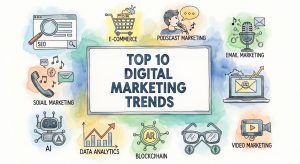
Top 10 Digital Marketing Trends For 2026
The digital landscape continues its rapid evolution, driven by advancements in AI, changes in consumer behavior, and new platform capabilities. For marketers to succeed in 2026, understanding and adapting to the following ten trends will be crucial.
1. Hyper-Personalization Fueled by Generative AI
Generative AI will move beyond content creation and revolutionize personalization. Marketers will use AI to analyze vast datasets in real-time, delivering truly unique content, product recommendations, and ad experiences tailored to an individual’s immediate context and intent, rather than just basic segmentation.
2. The Rise of Vertical Video and Short-Form Content Dominance
Platforms like TikTok, Instagram Reels, and YouTube Shorts will continue to dominate attention spans. Brands must prioritize high-quality, authentic, and easily digestible vertical video content for awareness, engagement, and conversion campaigns. Live commerce integration within these formats will also accelerate.
3. Privacy-First Marketing and Cookieless Solutions
With the deprecation of third-party cookies across major browsers, privacy-centric data collection (zero- and first-party data) will become paramount. Marketers will focus on building direct customer relationships, using Customer Data Platforms (CDPs), and adopting contextual advertising techniques to maintain reach and relevance while respecting user privacy.
4. Interactive and Immersive Experiences (AR/VR/Metaverse)
While the full “Metaverse” might still be nascent, Augmented Reality (AR) experiences—such as virtual try-ons for e-commerce, interactive filters, and in-store navigation—will become mainstream marketing tools. Brands will invest in creating immersive, interactive digital storefronts and campaigns that bridge the physical and virtual worlds.
5. Sustainability and Ethical Marketing
Consumers, particularly younger generations, increasingly demand transparency and ethical responsibility from brands. Marketing messages focused on sustainability, supply chain ethics, and social impact will resonate more deeply. “Greenwashing” will be heavily scrutinized, making authentic corporate social responsibility (CSR) initiatives essential.
6. Search Generative Experience (SGE) Optimization
The integration of generative AI directly into search engine results pages (e.g., Google’s SGE) fundamentally changes SEO. Marketers must optimize content not just for keywords, but for inclusion in AI-generated summaries and conversational answers, focusing on authority, comprehensiveness, and E-E-A-T (Experience, Expertise, Authoritativeness, Trustworthiness).
7. Conversational Commerce and Chatbots 2.0
AI-powered chatbots and virtual assistants will become more sophisticated, handling end-to-end customer journeys from discovery and product education to personalized checkout and post-purchase support. Conversational marketing will be a key channel for immediate lead qualification and sales.
8. Influencer Marketing Maturation and Micro-Niche Focus
The focus will shift from mega-influencers to a strategic network of micro- and nano-influencers who possess deeper engagement and specific niche authority. Authenticity, long-term partnerships, and measurable ROI through affiliate linking and direct sales will define successful influencer strategies.
9. Audio Marketing Expansion (Podcasts and Voice Search)
The consumption of podcasts, audiobooks, and streaming music continues to grow, providing new advertising opportunities. Additionally, optimizing content for voice search queries (which are often longer and more conversational) will be necessary as smart speaker adoption increases.
10. Measuring Marketing ROI with Cross-Channel Attribution
As channels proliferate (paid social, connected TV, retail media networks, etc.), sophisticated cross-channel attribution models will be required to accurately understand the true impact of marketing spend. Marketers will rely on advanced analytics and unified data views to justify investments and optimize budgets across the entire customer journey. trends for 2026
Trends in social media marketing are shifting toward AI content, short videos, and personalized ads. In social media marketing trends 2026, brands focus on creator partnerships and real-time engagement. Advertising trends video media market analysis shows video ads driving the highest reach and conversions. Ecommerce trends February 2026 highlight mobile shopping and AI chatbots, while social commerce trends continue to grow as users shop directly through social media platforms.
