

How to Become a Data Analyst in 2026
The demand for skilled Data Analysts continues to grow rapidly. In 2026, the pathway to this rewarding career emphasizes a blend of core technical skills, business acumen, and continuous learning. This guide outlines the key steps to successfully transition into a Data Analyst role.
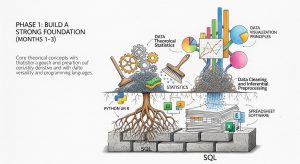
Phase 1: Build a Strong Foundation (Months 1-3)
A solid base in foundational skills is non-negotiable.
1. Master Essential Tools
Focus on the following critical tools and languages:
- SQL (Structured Query Language): The most fundamental skill for querying and manipulating data in relational databases.
- Python or R: Essential for data analysis, statistical modeling, and visualization. Python is highly versatile, while R is favored in academia and advanced statistical analysis.
- Spreadsheet Software: Deep proficiency in Google Sheets or Microsoft Excel is necessary for initial data cleaning, quick analysis, and reporting.
2. Understand Core Concepts
Invest time in understanding the theoretical backbone of the field.
- Statistics: Learn descriptive statistics (mean, median, mode), inferential statistics (hypothesis testing), and probability.
- Data Cleaning and Preprocessing: Understand the importance of handling missing values, outliers, and data transformations.
- Data Visualization Principles: Learn how to effectively communicate data stories using appropriate charts and graphs.
Phase 2: Acquire Practical Experience (Months 4-8)
Knowledge without application is insufficient. Practical experience validates your skills.
1. Complete Certifications
Enrolling in reputable certification programs provides structured learning and a recognized credential.
| Certification | Focus Area | Recommended Provider |
|---|---|---|
| Google Data Analytics Professional Certificate | End-to-end data analysis process | Coursera/Google |
| Microsoft Certified: Data Analyst Associate | Power BI and data modeling | Microsoft Learn |

2. Build a Portfolio
A strong portfolio is your resume in the data world. Your projects should demonstrate the full cycle of data analysis.
| Project Type | Skill Demonstrated | Example |
|---|---|---|
| Exploratory Data Analysis (EDA) | Data cleaning, visualization | Analyze a dataset from Kaggle on public health |
| Statistical Analysis | Hypothesis testing, regression | Predict house prices based on features |
| Business Problem Solving | SQL, dashboard creation | Analyze sales data to identify trends for a hypothetical e-commerce company |
3. Participate in Data Challenges
Engage with the data community through platforms like Kaggle or DataCamp.
Phase 3: Land the Role (Months 9+)
With skills and a portfolio in hand, focus on the job market.
1. Create Professional Materials
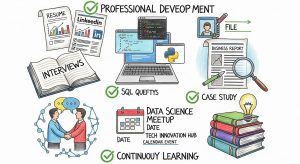
Update your resume and LinkedIn profile to highlight your technical projects and business impact. Remember to include your portfolio link:
2. Prepare for Interviews
Data Analyst interviews typically involve a mix of technical, behavioral, and case-study questions.
- Technical Test: Practice timed SQL queries and Python/R coding challenges.
- Case Study: Be ready to walk through your analytical process for a business scenario. Example preparation material is available here: .
3. Network
Attend industry events and connect with professionals in the field. A great local networking event is the Data Science Meetup. You can find event details and registration by clicking the link to the event.
4. Continuous Learning
The field of data analysis evolves quickly. Stay up-to-date by regularly reading industry blogs, learning new tools (e.g., advanced machine learning techniques), and specializing in a domain (e.g., Finance, Marketing, Healthcare).
Check out our YouTube channel : innozant
Read Also : How to Use Conditional Formatting in Excel
